
Southern edge of our service area, City of Toronto
Demolition contractor for North York. Toronto rules, handled right.
Willowdale, Newtonbrook, Bayview Village, Lansing, Don Mills and York Mills, North York is the southern edge of our York Region base, and it plays by a different rulebook than the rest of it. Toronto Building permits, the private tree bylaw, and ravine protection along the Don River tributaries all apply here and don't apply a few kilometres north. We work inside those rules every day.
WSIB
Clearance on request
$5M
Liability insured
Licensed
Ontario contractor
Swept-clean
Debris hauled same day
The thing nobody tells you
North York is Toronto. Your permit isn't a York Region form.
Toronto Building permits
City of Toronto
Demolition permits here go through Toronto Building, with their own application streams for demolition-with and without a replacement building, a damage deposit against the curb and boulevard, and survey requirements that go beyond what neighbouring municipalities ask for.
Private tree bylaw
30 cm DBH and up
Any private tree with a trunk 30 cm or wider (measured 1.4 m up) is protected. Injuring roots during demolition counts, not just cutting it down. Mature Willowdale and Newtonbrook lots often have several. We plan around them before equipment ever shows up.
Ravine protection
Don River tributaries
Toronto's Ravine and Natural Feature Protection Bylaw covers lots backing onto ravines and valley forest along Don River tributaries that run through North York. Those properties can need a separate ravine permit on top of the building permit.
We don't file your permits. That's the owner's or builder's job, but we'll tell you on the first call whether your address looks like it falls under the tree bylaw or the ravine bylaw, and what Toronto Building will expect to see. Toronto's noise bylaw is also tighter than most surrounding municipalities: construction noise is allowed Monday to Friday 7am–7pm and Saturday 9am–7pm, with no Sunday or holiday work without an exemption. We schedule inside those hours as standard.
What we do here
Demolition services in North York
Willowdale is one of the GTA's most active teardown-rebuild markets, 1960s bungalows and split-levels coming down for custom builds on the same mature lots, block by block. Don Mills and York Mills carry a similar mix of dated bungalows on big lots. Most of our North York work is full house demolitions ahead of a rebuild, plus interior strip-outs and pool removals on properties that are staying put.
Pool Removal in North York
Pool removal and fill-in across York Region and Toronto.
Pricing →
Above-Ground Pool Removal in North York
Above-ground pool removal in Toronto & York Region from $1,200.
Pricing →
Inground Pool Removal in North York
Inground pool removal in Toronto & York Region: partial fill-in from $6,000, full removal from $12,000.
Pricing →
Hot Tub Removal in North York
Hot tub removal in Toronto & York Region.
Pricing →
Garage & Shed Demolition in North York
Garage demolition and shed removal across York Region, Toronto and selected GTA markets.
Pricing →
Chimney Removal in North York
Chimney removal in Toronto & York Region.
Pricing →
Concrete Removal in North York
Concrete and driveway removal across York Region and Toronto.
Pricing →
Interior Demolition in North York
Interior demolition across York Region and Toronto.
Pricing →
Wall Removal in North York
Wall removal in Toronto and York Region.
Pricing →
House Demolition in North York
House demolition across York Region, Toronto and selected GTA markets.
Pricing →
Kitchen Demolition in North York
Kitchen demolition across York Region and Toronto.
Pricing →
Floor Removal in North York
Floor removal in Toronto & York Region: tile, hardwood, laminate, carpet and glued-down floors, dust-controlled and hauled.
Pricing →
Bathroom Demolition in North York
Bathroom demolition across York Region and Toronto.
Pricing →
Basement Demolition in North York
Basement demolition and gut-outs across York Region and Toronto.
Pricing →
Deck & Fence Removal in North York
Deck and fence removal across York Region and Toronto.
Pricing →
Commercial Demolition in North York
Commercial demolition and interior strip-outs across York Region, Toronto and selected GTA markets.
Pricing →
Retail Strip-Out in North York
Retail and office strip-out in Toronto & York Region.
Pricing →
Debris Removal in North York
Construction debris removal across York Region and Toronto.
Pricing →
Construction Waste Removal in North York
Crew-loaded construction waste removal in Toronto and York Region.
Pricing →
Planning a Willowdale rebuild?
Get the demolition and permit path costed before you close on the lot.
(647) 824-9839North York, neighbourhood by neighbourhood
Six pockets, six different builds behind the front door.
"North York" covers a lot of ground and a lot of different housing stock, a 1930s York Mills estate lot isn't the same job as a 1950s Don Mills bungalow. Here's what we run into neighbourhood by neighbourhood.
Willowdale
1920s–1950s
Edwardian and Tudor houses from the 1920s give way to post-war bungalows and split-levels further west. Along with Bayview Village, Lansing-Westgate and Newtonbrook, it is one of the highest-volume teardown-rebuild pockets in the GTA. That pattern dates back to the 'monster home' boom of the 1990s, when big new builds first started going up next to two-bedroom bungalows on the same street.
Newtonbrook
1920s–1960s
Subdivided for mass residential development in the 1950s, after decades as farmland with saw and grist mills on the Don River branches. Storey-and-a-half homes, split-levels, and bungalows from that era are now split between custom-rebuild teardowns and townhouse redevelopment on assembled lots.
Bayview Village
1954–1964
Planned as a single development by Farlinger Development Ltd., with the curving streets you'll notice were laid out by town planner E. G. Faludi. Ranch bungalows, split-levels, and Georgian Revival homes make up most of the stock, and most are still original, which is exactly the kind of aging inventory that feeds a steady teardown pipeline.
Lansing
1920s–1940s + post-war
Edwardian, Tudor, English Cottage and Craftsman houses from the 1920s–40s sit alongside post-war bungalows nearer Yonge and Sheppard. Long-time owners in those bungalows are increasingly selling to builders who tear down one or two lots at a time for larger new houses.
York Mills
1930s–1960s
Estate-style development began in the 1930s on the ridge near St. John's Church and spread through the Hedgewood Road area; most homes date from the 1920s through the 1960s. Bigger lots and higher land values mean full house demolitions here tend to be one-off custom rebuilds rather than volume flips.
Don Mills
1952–1965
Canada's first planned suburb, bungalows and two-storey homes on curved streets, built out between 1952 and 1965 and later recognized with an Ontario Heritage Foundation designation. The original bungalow stock is aging, and interior strip-outs and additions show up here as often as full teardowns.
Know your neighbourhood. Know your number.
Tell us the street and the project, same-day quotes for North York addresses.
Budgeting a North York project
What demolition costs in North York
Same posted ranges as the rest of our service area, Toronto doesn't change the base price, but a few things about working here can shift where a job lands inside that range.
Typical pricing
| Above-ground pool removal | $1,200–$3,500 | Pool and deck teardown, haul-away included |
| Inground pool removal | $6,000–$20,000+ | Partial fill-in through full shell removal |
| Garage teardown | $2,500–$8,000 | Detached single- to double-car, haul-away included |
| Interior strip-out | $2–$7 / sq ft | Non-structural demolition to studs |
| Concrete removal | $2–$6 / sq ft | Driveways, patios, pads |
| House demolition | $15,000–$45,000 | Bungalow to two-storey, foundation included |
Typical ranges across our service area. Final pricing depends on size, access, and site conditions, every quote is free, written, and firm before work begins.
What's different in Toronto
- Damage deposit. Toronto Building holds a refundable deposit against curb and boulevard damage, not a demolition cost, but it's cash tied up until final inspection clears it.
- Tree protection hoarding. A protected tree near the worksite means fencing and root protection built into the plan, which can add a small line item on Willowdale and Newtonbrook lots with mature trees.
- Tighter infill lots. Narrower Willowdale and Lansing rebuild lots limit equipment size and bin placement, which sometimes means more hand-supported work than an open York Region suburban lot needs.
Full pricing detail and FAQs live on each service page: house demolition, interior demolition, pool removal, garage & shed demolition, and concrete removal.
Local work
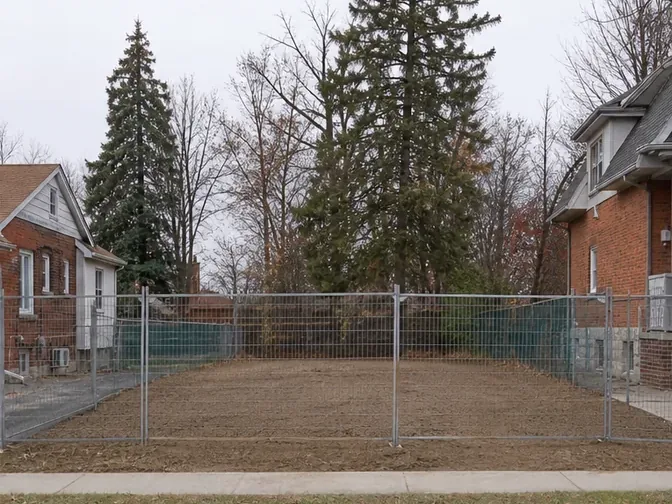
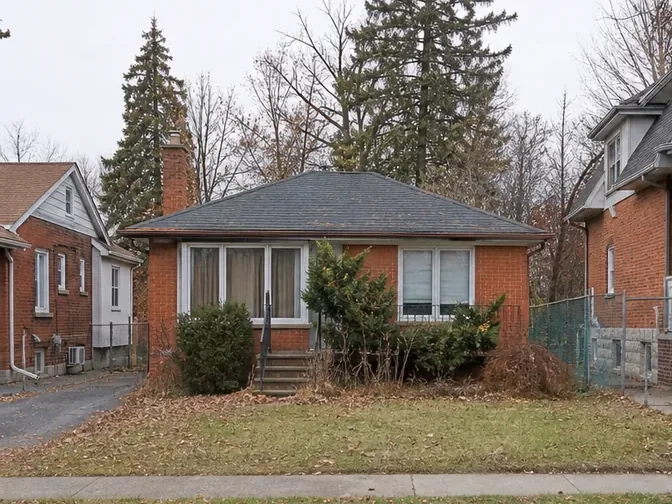
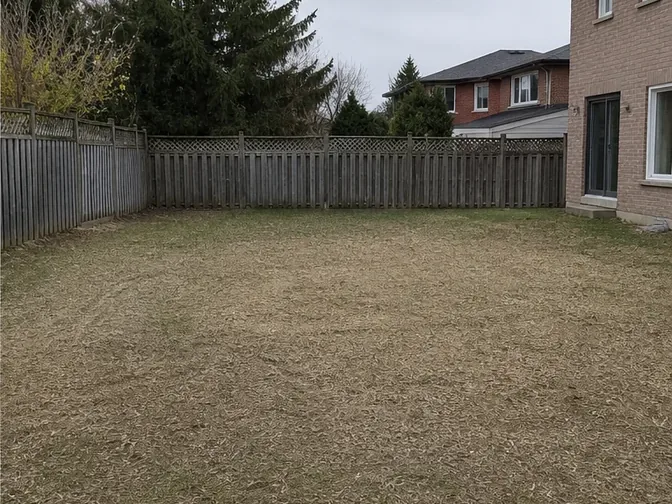
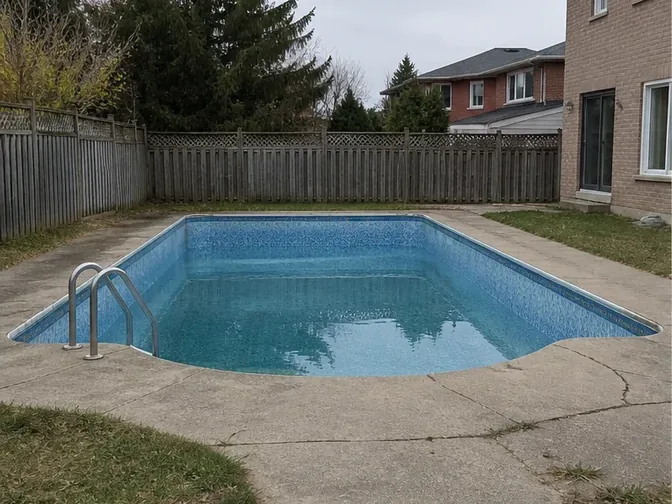
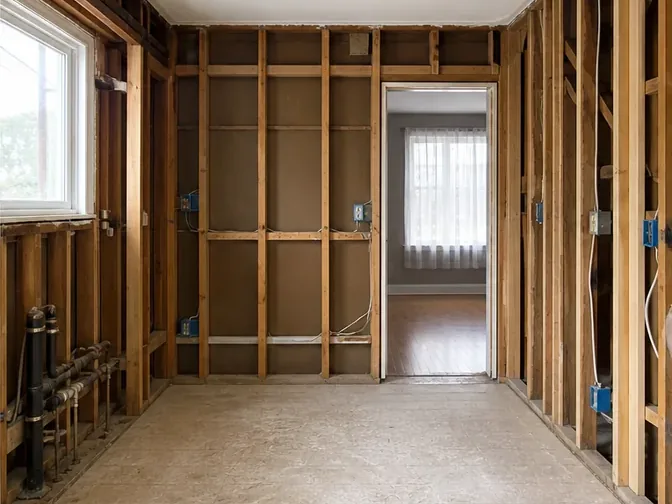
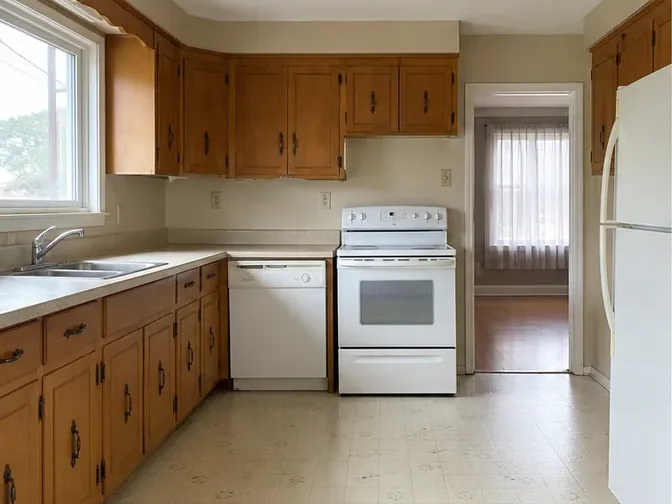
Recent North York projects
Drag the handle on any project to compare before & after.
Local answers
North York demolition FAQs
Who issues demolition permits in North York?
North York is the City of Toronto, permits go through Toronto Building, not a York Region office. That's a different system than the rest of our service area: Toronto has its own application forms, its own damage-deposit requirements against the curb and boulevard, and (as of a form update earlier this year) its own current version of the Application for a Permit to Construct or Demolish. If you're planning a demolition-with-replacement-building, the survey and grading-plan requirements are stricter than what neighbouring municipalities ask for. We'll walk you through exactly what Toronto Building wants before you file.
Do I need a tree permit before demolition in North York?
Possibly, and it's worth checking before we start. Toronto's private tree bylaw protects any tree on your property with a trunk diameter of 30 cm or more, measured at 1.4 m up the trunk, and construction activity close enough to injure roots or branches counts as an offence even if you never touch the tree directly. Fines run into the tens of thousands per tree. On mature Willowdale and Newtonbrook lots with big old maples and spruces near the house, we flag protected trees during our site walk and plan equipment paths and hoarding around them.
Is my North York property in a ravine protection area?
Some are. Toronto's Ravine and Natural Feature Protection Bylaw covers roughly 110 square kilometres of ravine and tableland-forest lots city-wide, including stretches that follow Don River tributaries through North York. If your lot backs onto a ravine or wooded valley, work within the regulated area, including grading, tree removal, and sometimes demolition itself, needs a separate ravine permit on top of your building permit. We can tell you on the first site visit whether your property looks like it falls inside a mapped ravine boundary, though the City's ravine permit desk makes the final call.
What hours can you run equipment in North York?
Toronto's noise bylaw (Chapter 591) allows construction noise Monday to Friday, 7 a.m. to 7 p.m., and Saturday 9 a.m. to 7 p.m. No construction noise Sundays or statutory holidays without a separate noise exemption permit. We schedule demolition and haul-out inside those windows as standard. It's tighter than what some surrounding municipalities allow, so if a job needs an early start or a Sunday push, that has to be arranged with the City in advance, not assumed.
Does North York demolition cost more than the rest of your service area?
No, same posted ranges apply: $15,000–$45,000 for a full house demolition depending on size and foundation, $2–$7 per square foot for interior strip-outs, $12,000–$20,000+ for a full inground pool removal. What can add cost in North York specifically is tighter urban lots (Willowdale infill sites are often narrower than York Region suburban lots, which limits equipment size and bin placement) and any tree-protection fencing a protected tree requires.
How fast can you get to a North York job?
North York sits at the southern edge of our York Region base, so it's a short run down Yonge or the 404, not a cross-city haul. Quotes on Willowdale, Newtonbrook, Bayview Village, Lansing, Don Mills, and York Mills addresses are typically same-day, and small jobs can often be scheduled within the week.
What's the difference between demolition with a replacement building and without?
It changes which Toronto Building application and paperwork applies. Demolition-with-replacement, tearing down a house to build a new one, needs the replacement building permit filed alongside the demolition application, plus the survey and grading plan we mentioned above. Demolition-without-replacement, like clearing a lot with no immediate rebuild or removing a structure that's simply not coming back, is a lighter standalone application, though the site still has to be left graded and safe. Tell us which situation you're in on the first call and we'll tell you which stream you're filing under.
What is the damage deposit and do I get it back?
Toronto Building holds a refundable deposit before issuing a demolition permit, against damage to the curb, boulevard, sidewalk, and road allowance while equipment and bins are on site. The amount scales with the job and the street frontage, and the City inspects the boulevard before and after. If it comes through undamaged, the deposit is returned in full once the job closes out. We plan bin placement and equipment paths to protect that boulevard as standard, but the deposit itself is arranged by whoever pulls the permit, usually the owner or builder.
When should I apply for a tree permit if I have a protected tree?
As early as you can, before a demolition date gets set, not after. Tree permit review runs on its own timeline separate from the demolition permit, and depending on the season and how many protected trees are involved, it can take a few weeks to clear. If you know a rebuild is coming, get the tree assessment and permit application moving as soon as the design is settled. Once it's approved, tell us the boundary and any protective hoarding the City requires, and we build our equipment plan around it.
Are you planning a laneway suite, does the old garage need to come down first?
Usually, yes. Toronto now permits laneway and garden suites in most residential zones, and the existing garage is often standing right where the new structure needs to go, or its old foundation isn't suited to the new build. Garage demolition is typically step one, see our garage & shed demolition page, and a clean, properly graded footprint makes the design and permit process for the suite itself simpler. If a full house teardown is part of the plan too, that changes the sequencing, so tell us the whole project and we'll set the order of work.
Just north of North York? Our home base of Thornhill is minutes up Yonge, same crew, same rules once you cross back into York Region.
North York job? We're right down the road.
Same-day quotes for North York addresses, call now.