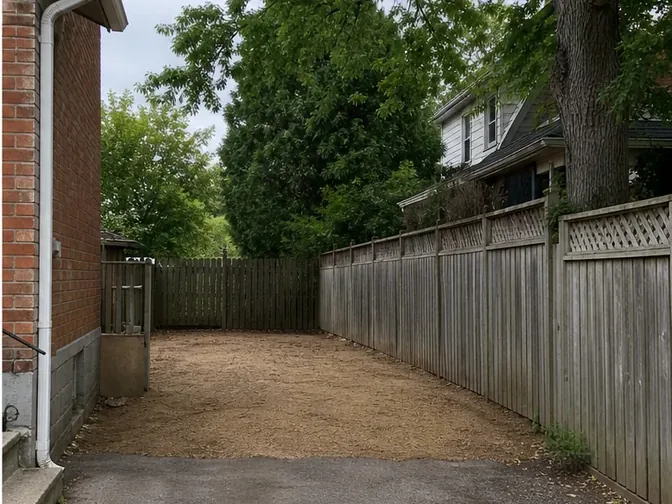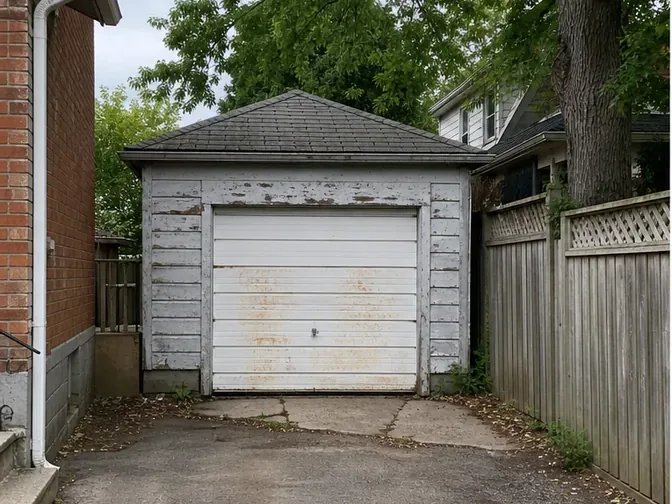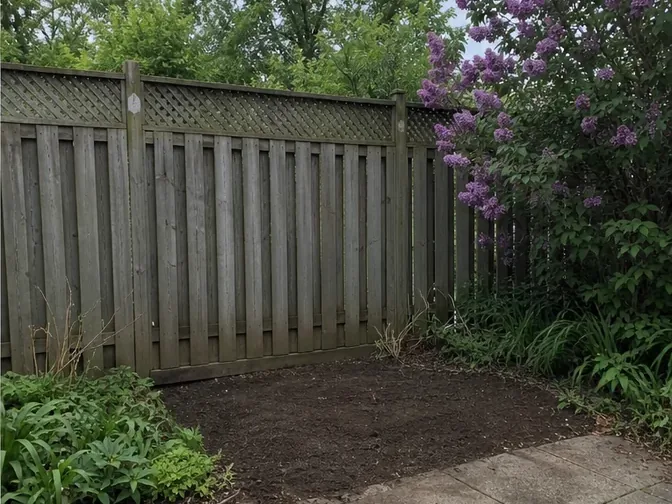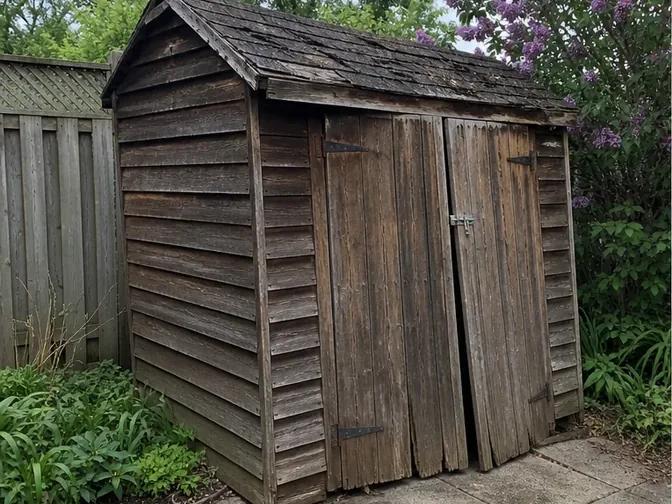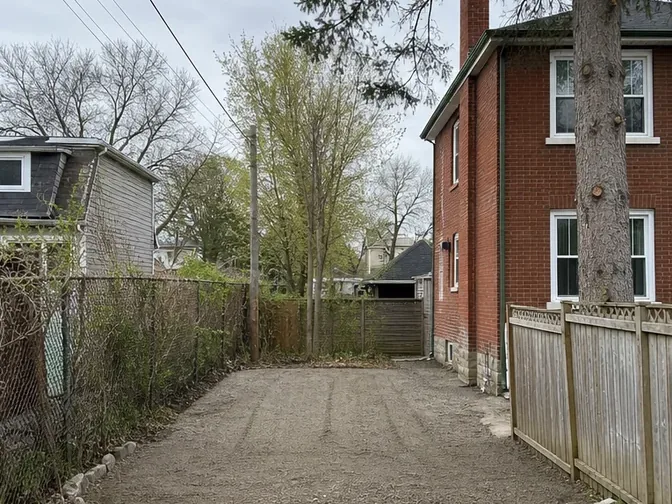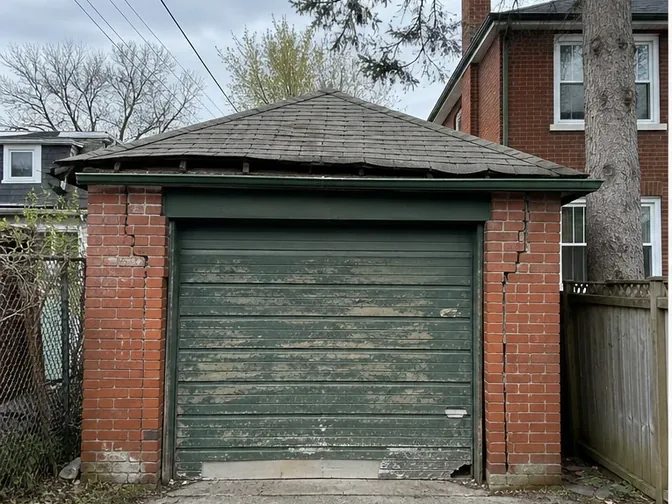
Every old garage or backyard shed hits the same point eventually: rot in the framing, a roof past saving, a slab that heaves every winter, and repairing it starts costing more than replacing it. That’s when removal becomes the practical option. Photos can establish the size and construction, while attached structures, utilities, tight access and slab removal may require a site visit before the written quote. Here’s what garage demolition and shed removal cost in York Region, and what to settle before work begins.
Just a shed inside the city? See shed removal in Toronto.
How much does garage demolition and shed removal cost in the GTA?
A detached single-car garage in York Region typically costs $2,500–$5,000 to demolish and remove; a double runs $4,000–$8,000. Shed removal runs $400–$1,200 for most backyard sheds. Concrete slab removal is a separate line at $2–$6 per square foot, so you only pay for it if you want the slab gone.
What moves the price within those ranges:
| Cost factor | Effect on price |
|---|---|
| Attached vs. detached | Attached garages share a wall and roofline with the house, so separation is slower, more careful work, expect a higher per-square-foot rate than detached. |
| Construction material | Wood-frame structures come down quickly. Concrete block or brick roughly doubles the labour and the disposal tonnage. |
| Roofing layers | Older garages often carry two or three generations of shingles; disposal is billed by weight, so every layer counts. |
| Yard access | A bin staged on a driveway or laneway keeps costs down. Debris carried through a narrow side yard adds crew hours. |
| Slab removal | Optional. Keeping a sound slab saves money; removing a damaged one adds the per-square-foot line above, see our concrete removal page for how that’s priced. |
| Contents | An empty structure is the cheapest structure. We can clear contents too, mention it during the quote so it’s priced upfront. |
If the garage is coming down as part of a full teardown, see our house demolition page instead. Otherwise, send photos of the structure, access route and slab so we can determine whether the written quote needs a site visit.
Do you need a permit to tear down a garage or shed in Vaughan and Markham?
Sheds under the Ontario Building Code’s exemption threshold, 15 m², about 160 square feet, generally come down without a permit. Garages generally need one, and anything with a utility connection usually does regardless of size.
Thornhill properties fall under two municipalities: the City of Vaughan west of Yonge Street and the City of Markham east of it, each with its own building department and forms. Properties in the Thornhill Heritage Conservation District may also need heritage review before a permit is issued. We’ll identify the right office for your address and explain what it typically requires; the permit application itself belongs to the property owner.
Not sure which office covers your address? Call us before you spend an afternoon on hold with the city. We’ll tell you where you stand in a couple of minutes.
Utility disconnection: the step that comes before every teardown
The most dangerous assumption in backyard demolition is that an old garage has no power. Most of them do, a buried or overhead feed installed decades ago that isn’t on any drawing. So before anything comes down, we locate that feed and confirm it’s dead, and any gas or water lines get capped by the right licensed trade. It’s built into every job, and it’s the first question we ask on the phone.
What happens on demolition day: the process step by step
- Site preparation. Utility disconnections confirmed, fence lines and anything staying protected, bin staged as close as access allows.
- Strip-down. Doors, windows, and roofing come off first so materials can be sorted, shingles separate from clean wood, metal set aside for recycling.
- Controlled teardown. Walls come down in planned sections. Structures near property lines or leaning on fences are dismantled by hand where needed.
- Slab work, if included. The pad is broken out with the right-sized equipment and the concrete is sent for recycling.
- Load-out and final sweep. Debris leaves on the schedule stated in the quote. The footprint is raked, magnet-swept for nails and screws, and left ready for what’s next.
Most garages are down and gone in one day; sheds usually take a few hours.
Keep the slab or remove it: how to decide
Keep it if it’s level, sound, and you’re rebuilding on the same footprint, a good slab is money already in the ground, and we’ll broom-sweep it clean as our last step. Remove it if it’s cracked or heaved, because a new garage on a bad slab inherits every problem under it, or if the space is becoming lawn, where a buried slab means dead grass every dry July.
Where the debris goes: disposal and recycling
Concrete and masonry go to aggregate recycling. Metal, garage doors, tracks, roofing, goes to scrap. Clean wood is diverted from landfill where loads allow. Disposal appears as part of your single written quote, never as a surprise fee afterward.
Planning a laneway or garden suite? Start with the teardown
Across Vaughan, Markham, and Toronto, garden and laneway suites are permitted in many residential zones, and an aging garage is often standing where the new suite goes. Garage removal with the correct endpoint is step one of that project. Tell us what’s planned for the space and we’ll leave the site ready for your designer and builder.
Garage and shed removal across the service area
We quote garage and shed removal across York Region, Toronto and selected extended markets. Send the address, structure dimensions, access photos, utility status and whether the slab stays. That information determines whether photos are enough or a walkthrough is needed.