
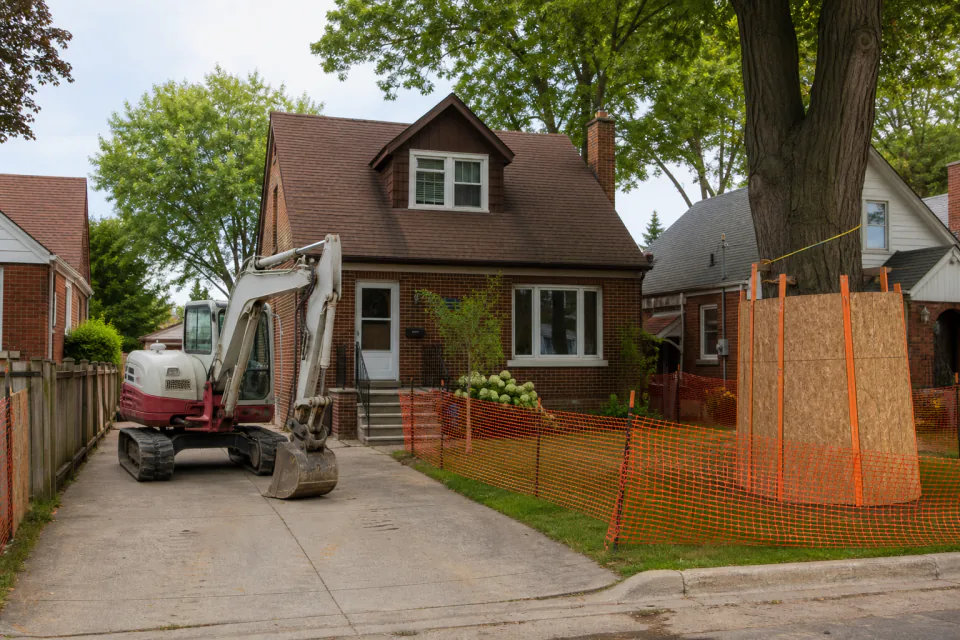
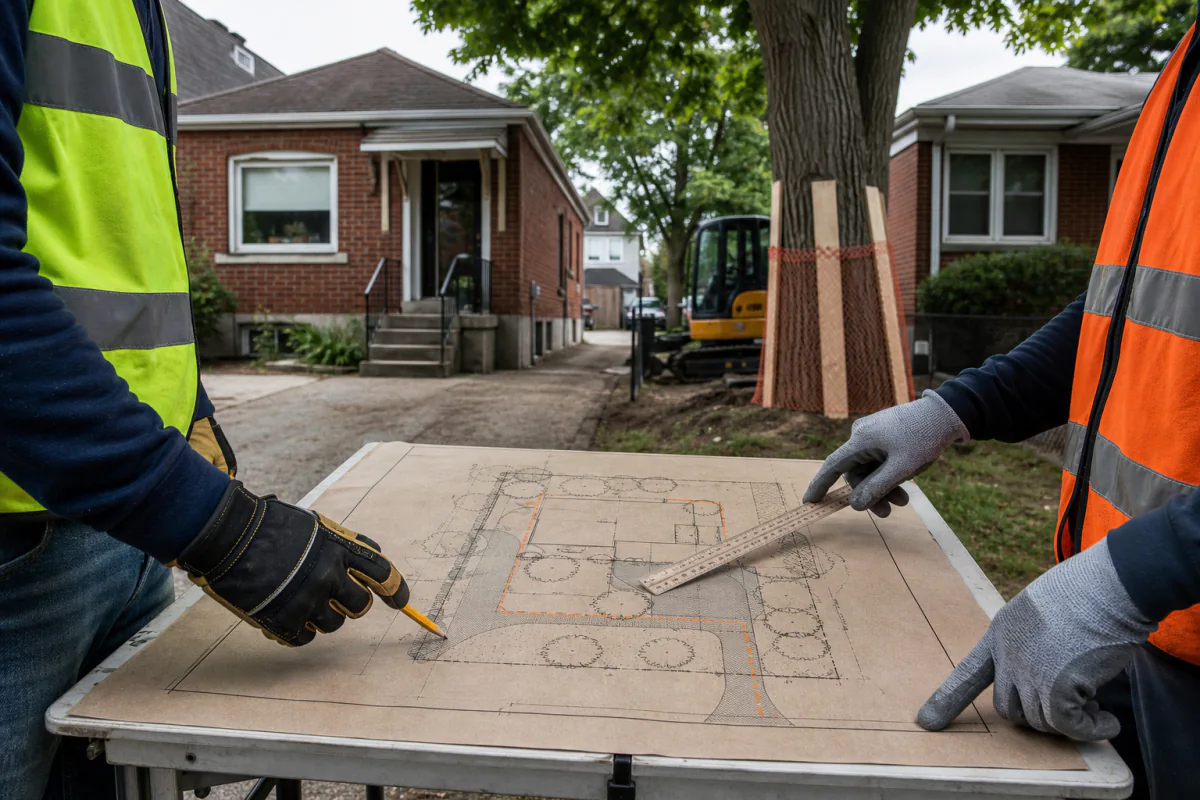
Mississauga does demolition permits differently than most of the GTA, and it’s the kind of difference that only shows up once you’re already partway into a project. Most municipalities treat a demolition permit as a standalone approval tied to the physical scope of the teardown. Mississauga’s Demolition Control By-law ties the permit to what happens after — it wants to see a redevelopment plan and a rebuild timeline before it approves tearing the house down. Homeowners who plan around a generic “get the permit, then demolish” sequence lose weeks to that gap. Here’s what actually applies, what it costs, and what to line up before you call anyone.
Looking to hire a contractor rather than read up first? See our page on house demolition in Mississauga for how we work, what a job typically involves and how to get a written quote.
House removal cost in Mississauga: planning ranges
There’s no Mississauga-specific pricing published anywhere yet — reasonably so, since specific costs come from a site visit, not a blog post. What holds across the GTA is a planning range of $15,000–$45,000 for a full teardown, covering the structure, foundation removal, backfill, and rough grading. Bungalows and smaller footprints typically land in the lower half; larger two-storey homes with deeper foundations run toward the top.
Budget separately for the items around the demolition itself:
| Related cost | Typical range | Arranged by |
|---|---|---|
| Designated substances (asbestos) survey | $500–$1,500 | Owner, required before permit |
| Asbestos abatement, if found | $2,000–$20,000+ | Licensed abatement contractor |
| Demolition Control Permit | No fee under 6 units | Owner or builder applies via ePlans |
| Private tree removal permit | $399.77 first tree, $139.72 each additional healthy tree | Owner, if 15cm+ trunk diameter trees are affected |
| Utility disconnection fees | Set by each utility | Owner orders |
What moves a quote within the range: house size and construction, foundation depth, lot access for equipment and trucks, and how close neighbouring structures sit. A firm, written number comes after a site visit — not before.
The Demolition Control Permit: the part that surprises people
Mississauga’s Demolition Control By-law 0045-2019 exists to stop residential lots from sitting demolished and vacant. For projects demolishing fewer than six dwelling units, the current process applies: no permit fee, but standard conditions — including a timeline for rebuilding — are attached to the approval. Applications over six units require a Section 99.1 permit and, in most cases, Council approval.
The practical effect for a typical homeowner project: have your rebuild plans and timeline settled before you apply, not loosely sketched. A demolition permit application that shows up without that is the kind of thing that stalls in review rather than moving through it. Submissions go through the city’s ePlans portal; questions on a specific file go through 311 (905-615-4311 outside city limits).
Private trees: a separate permit, a real fee, a real wait
If any tree on the property is 15cm or more in trunk diameter — roughly the width of a coffee mug — Mississauga’s Private Tree By-law requires its own permit before that tree comes down, independent of the demolition permit itself. The fee is $399.77 for the first tree and $139.72 for each additional healthy tree (HST included), and the city has up to 30 business days to review a complete application.
That review window matters for sequencing. If equipment access runs anywhere near a mature tree — even one that isn’t being removed but needs protection hoarding — get the tree question answered in week one, not discovered when a crew shows up and can’t get equipment onto the lot.
Noise bylaw: when work can actually happen
Mississauga’s noise bylaw permits construction noise, including demolition, from 7 a.m. to 7 p.m., Monday through Saturday. No construction noise is allowed on Sundays or statutory holidays, and extended quiet hours apply near hospitals and nursing homes. That’s a tighter default than some neighbouring municipalities that allow later starts or partial Saturday-only restrictions — worth knowing before assuming a six-day teardown schedule can run flush against a weekend.
Anyone needing hours outside that window can apply for a noise exemption through the city, but most residential teardowns don’t need one.
Asbestos survey: the same rule everywhere in Ontario
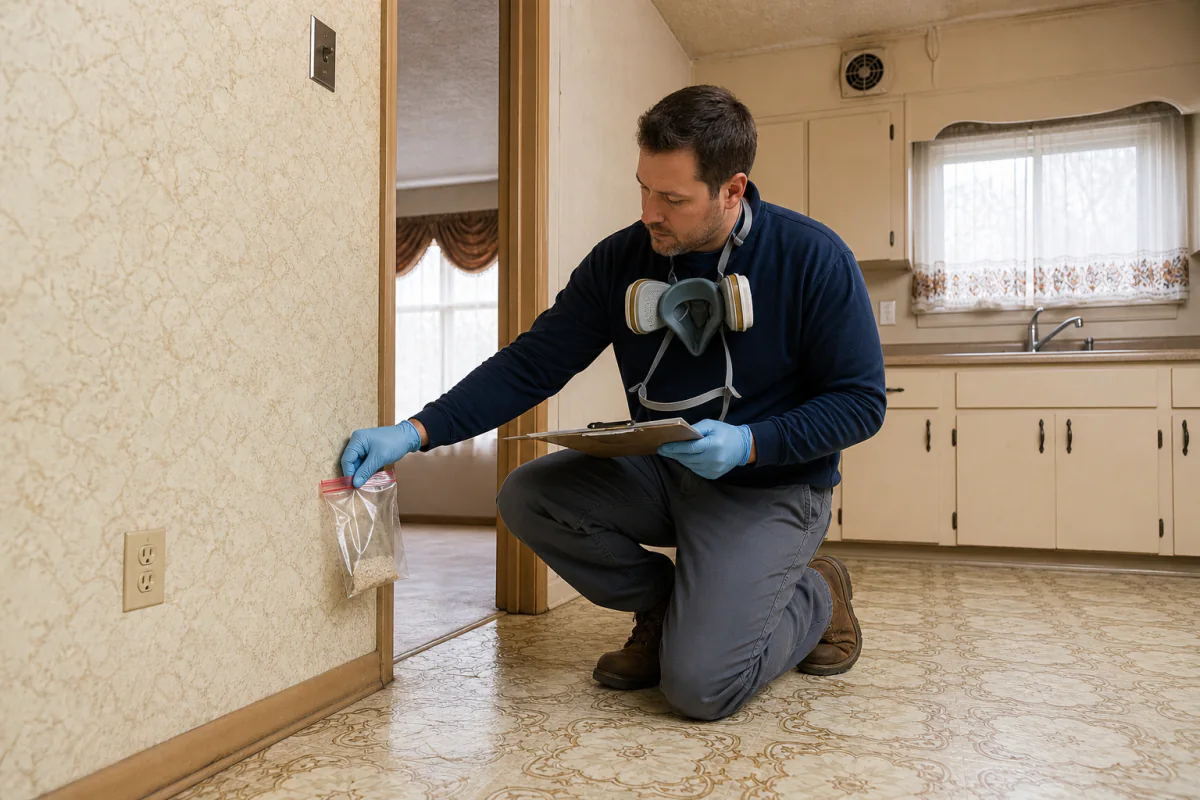
Ontario Regulation 278/05 requires a designated substances survey before demolition, and Mississauga requires it as part of the permit package like every other GTA municipality. The practical trigger is any home built before about 1990. Surveys run $500–$1,500; if the survey finds asbestos, licensed abatement — commonly $2,000–$20,000 depending on extent — happens before demolition, sequenced so it doesn’t stall the rest of the schedule.
Buying to rebuild: price it before you close
If a Mississauga property is on your radar as a teardown, the redevelopment-plan requirement changes the math slightly compared to other municipalities: the demolition timeline is tied to how developed your rebuild plans are, not just the physical scope of the house coming down. A property with vague or unfinished rebuild plans can sit longer in permit review than the same house in a municipality with a standalone demolition approval. Knowing that before closing — not after — keeps the purchase math honest.
Next steps
We quote full teardowns, foundation removals, and suitable structural projects across York Region, Toronto, and selected extended GTA markets, Mississauga included. Start with the address, survey status, building size, and your redevelopment timeline — the written scope will lay out the demolition limits and the site handoff without claiming ownership of the owner’s permit process.