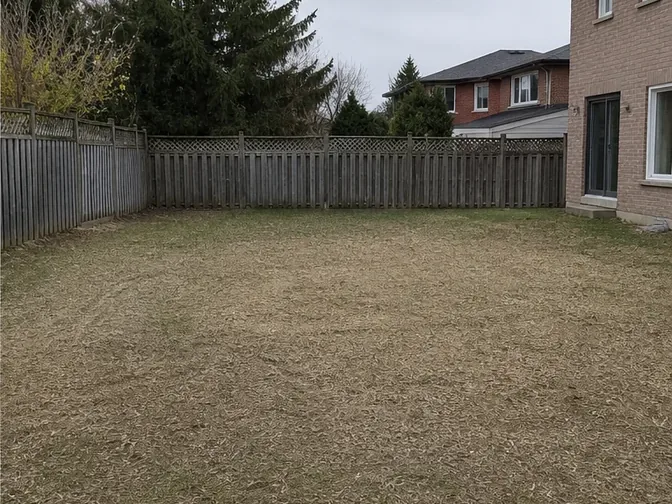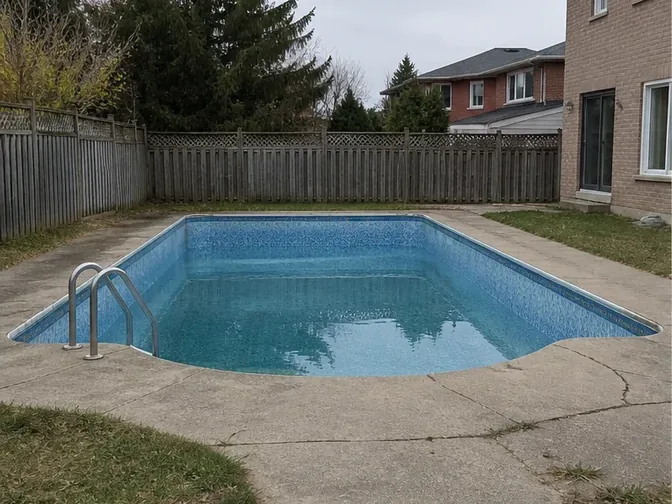
An inground pool is the big job of the pool world. The shell is concrete, gunite or vinyl-lined steel set into the earth, and getting rid of it properly is mostly about what happens underground. If you are done with the maintenance, the heating bills and the insurance, this page covers what inground pool removal costs in Toronto and York Region, how the two methods differ, and how the work goes from first call to finished yard. If your pool sits on top of the ground instead, that is a smaller job covered on our above-ground pool removal page, and our pool removal overview compares everything side by side.
Inground pool removal cost: the real ranges
Inground pool removal cost depends first on which method you choose. A partial fill-in typically runs $6,000–$12,000. A full removal runs $12,000–$20,000+. Concrete pool decking adds $2–$6 per square foot, and it is priced lower when it comes out in the same visit as the pool.
| Cost factor | Why it matters |
|---|---|
| Backyard access | The biggest single variable. A yard a machine can drive into through a gate costs far less than one that needs hand demolition or a crane over the house. |
| Pool construction | Vinyl-liner shells come apart fastest. Reinforced gunite or concrete is the slowest to break and the heaviest to haul. |
| Partial fill-in vs. full removal | Full removal roughly doubles the digging and disposal. |
| Decking and surround | Adds cost, but less than removing it as a separate project later. |
| Backfill specification | Compacted, layered backfill costs more than loose fill. It is also the difference between stable ground and a sinking dish. |
We do not give phone estimates that change once the crew arrives. Call with your pool size and a few photos of how a machine would reach the backyard, and the written quote you get is the price.
In ground pool removal: partial fill-in or full removal?
People search for “in ground pool removal” and “inground pool removal” and mean the same thing, but the real decision is between two methods.
A partial fill-in is the cheaper route. The top portion of the shell is broken down and the pieces are used or hauled off. Holes are opened through the bottom so water never collects in what is left, and the space is backfilled in compacted layers. It suits a yard that is becoming lawn, garden or patio, where you plan to stay put. Done with proper drainage and compaction, it holds up well for decades.
A full removal takes the entire shell out of the ground, including the floor and walls, and then fills the hole. It costs more because there is more digging, more material to haul away and more clean fill to bring in. In return you get ground that can be built on, and you have nothing buried to explain to a future buyer.
Here is how to choose in plain terms:
- Choose a partial fill-in if the space becomes grass, garden or a patio and you are staying in the home.
- Choose a full removal if you may build a garage, an addition, a garden suite or a deck with deep footings, or if you expect to sell.
A partial fill-in generally must be disclosed to buyers and cannot hold permanent structures. A full removal carries neither limit. Tell us what the yard is for and we will give you a straight recommendation. A lot of the time, the honest answer is the cheaper one.
Cost to remove an inground pool in Ontario: what moves the number
If you have been searching for the cost to remove an inground pool in Ontario, the ranges above are what we quote across Toronto and York Region. Three things push a job toward the top or bottom of a range.
Access. A machine that can roll through a gate keeps hours down. If the only route is a narrow side yard, material is carried out by hand in small loads, which takes longer and costs more.
Construction. A vinyl-liner pool breaks down quickly. A concrete or gunite shell with rebar takes more time, produces more weight and needs more trucking.
What you want afterward. A partial fill-in and a full removal are different jobs with different price tags. Add a concrete deck or surround and the total grows, though it grows less than if you tear out the deck separately later.
Doing it yourself rarely saves money. Between equipment rental, disposal and fill, a DIY inground removal often lands around $4,000–$7,000, and it comes without compaction standards or anyone to call if the yard settles.
What we remove
For a partial fill-in, the water is drained, equipment is disconnected, and the upper part of the shell is broken down. The bottom is opened for drainage and the hole is backfilled and compacted. For a full removal, the whole shell comes out of the ground.
In both cases the pool equipment is removed: pump, filter, heater and the lines that connect them. Concrete or stone decking and coping come out when they are in the scope. The pool fence is a separate decision, so tell us if you want it kept or removed, and see deck and fence removal if you want that priced too.
Concrete is kept separate from mixed debris where practical so it can be recycled. Metal goes for scrap and the rest goes into the bin.
Permits and approvals for inground pool removal
Most inground fill-in and removal jobs need some form of municipal sign-off. Toronto treats simple fill-ins differently from structural demolition. York Region municipalities, including Vaughan and Markham, have their own rules covering demolition, grading changes and the pool enclosure fence, which is regulated for as long as the pool holds water. Properties backing onto ravines or watercourses may also need clearance from the Toronto and Region Conservation Authority (TRCA) before municipal approvals can be issued.
We can tell you what usually comes up for your address and your chosen method. The property owner must confirm and file the applications with the municipality and any conservation authority before work is scheduled. Gas lines to a heater need a licensed trade to cap them, and we coordinate around that.
The inground pool removal process, step by step
- Assessment and written quote. Inground removals get a site visit and an access walkthrough, so the method, backfill and final grade are priced on what is really in your yard.
- Utility disconnection. Electrical to pumps and lights is made safe. Gas lines to heaters are capped by a licensed trade.
- Controlled draining. The water is dechlorinated and drained to the sanitary sewer at a controlled rate, following municipal rules.
- Demolition. The shell is broken down (partial fill-in) or fully dug out (full removal). Drainage holes are opened through any bottom that stays, so groundwater never collects under the yard.
- Backfill in compacted layers. Clean fill goes in layer by layer, and each layer is compacted before the next. This is the step that decides whether the ground stays level for thirty years.
- Grading and restoration. The surface is graded so water runs away from the house and finished with topsoil, ready for sod or seed. Debris is hauled away, usually the same day it is produced.
How long inground pool removal takes
A partial fill-in takes one to three days on site. A full removal takes up to a week. Including utility disconnections, any permits and final grading, most projects run one to three weeks from the first call to a finished yard. The permit step is the part owners control: the sooner you confirm it with your municipality, the sooner we can book a date.
What your yard looks like afterward
Properly backfilled ground grows grass within a season and stays level. That is the test. What you should never see is standing water, a slow dish forming where the deep end was, or chunks of old deck working up through the lawn. Those are the signs of loose fill and skipped compaction, which is why compacted, layered backfill is written into every pool quote we give.
We finish at a rough grade with topsoil. Sod, seed and landscaping are yours to arrange unless they are in the quote, and the yard is ready for them.
A recent inground pool removal in Thornhill
An aging inground pool in Thornhill took up most of the usable yard, and narrow side access meant the equipment route and lawn protection had to be planned before any concrete was broken. The pool was drained and disconnected, the shell and surrounding concrete were broken in a controlled sequence and hauled out over protective mats, and clean fill went back in compacted layers. You can see the before and after photos further down this page.
Inground pool removal across Toronto and York Region
We quote inground pool removal across Toronto and York Region from our Thornhill base, including Thornhill, Vaughan, Markham and Richmond Hill. To get started, send the pool dimensions, how it was built (concrete, gunite or vinyl liner), photos of the access to the backyard, and what you want the yard to become. We review the site before the method, backfill and final grade are priced. If you also have a hot tub or a deck to clear, ask us to quote it in the same visit.