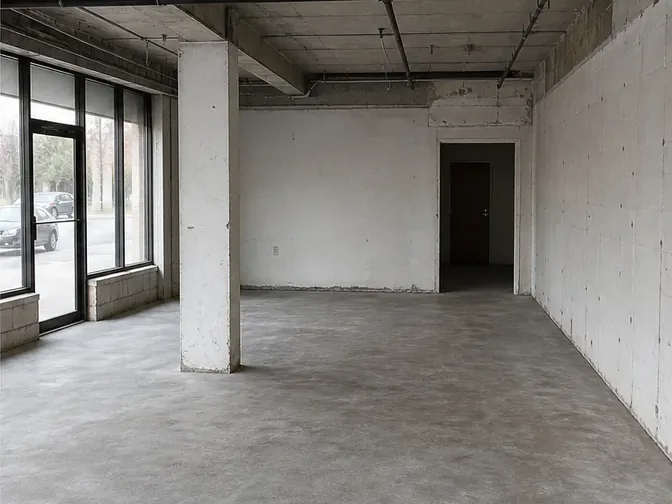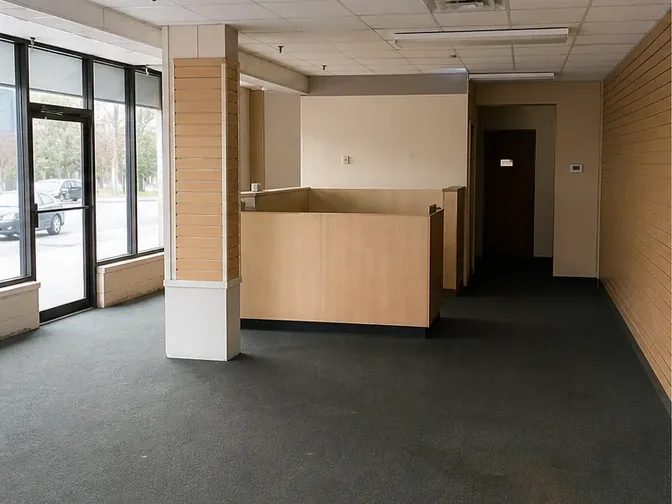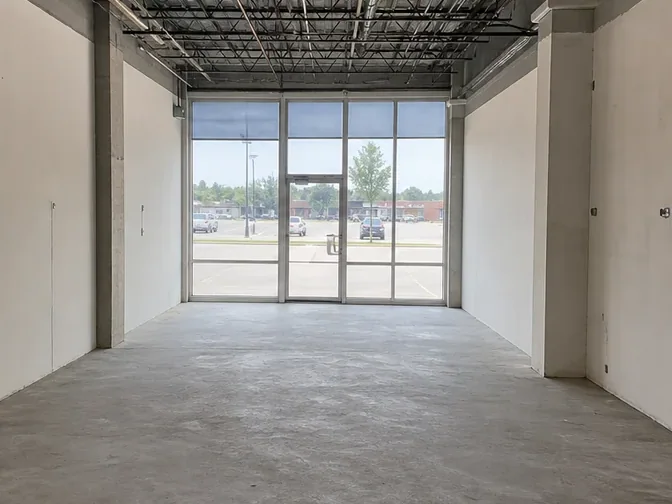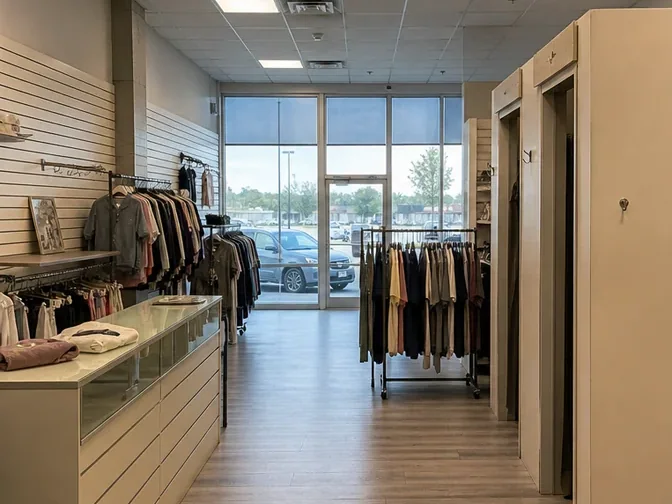
When a retail or office lease ends, the landlord expects the unit back in a specific condition and by a specific date. Miss either, and the tenant is paying holdover rent or losing a deposit. A strip-out is the work that gets you there: shelving, counters, partitions, ceilings and flooring come out, the space is cleaned up, and the unit is ready for inspection. Here is what it costs, what it covers, and how we handle the shared-building rules that come with plazas and malls.
Retail strip-out cost in Toronto
For an office or retail unit taken back to base-building, the typical range is $3–$8 per square foot, with the lower end for open, lightly finished units and the higher end for units with lots of partitions, heavy millwork or tile. Restaurant and kitchen units run $6–$14 per square foot because of grease-laden equipment, hoods and added services. After-hours work in occupied buildings carries a premium shown as its own line.
A 1,500 sq ft retail unit with basic fixtures and a drop ceiling will usually land near the lower half of the range. The same unit with a mezzanine, built-in cabinetry and ceramic tile floors will not.
Larger structural work, such as wall openings or slab cuts, is a different kind of job and is covered on our commercial demolition page.
What a strip-out includes, and where it stops
A strip-out normally covers non-structural items: shelving and display fixtures, cash counters, partitions, drop ceilings and grid, flooring, wall finishes, and millwork. Lights and wiring are removed once an electrician has made them safe. Plumbing and sprinkler lines are capped by the proper trade before we reach them.
It stops at the base building. We do not touch load-bearing walls, structural columns or the building’s own mechanical systems, and we do not remove asbestos or other hazardous material. In older buildings, a designated-substances survey is needed before demolition, and anything it flags is handled by a licensed specialist first.
The last step is clean-out: debris bagged and bin-loaded, floor swept, and the unit left ready for the landlord’s walkthrough.
Working inside an open plaza or mall
Shared buildings come with rules that a standalone job does not. Noise and dust cannot spill into neighbouring units. Carts and debris cannot block shared corridors. Many properties allow loud work only before opening or after closing, and the loading dock may be available only in a narrow window.
We plan around that. Floors and walls along the route are protected, dust is contained at the demising wall, and debris is moved in covered carts or enclosed containers when the property asks for it. Any insurance certificates or access forms the property manager needs are sorted out before the first shift.
Lease-end deadlines and scheduling
Lease deadlines are hard. If your last day is the 31st, the unit needs to be done and inspected before that, with time left over for fixes if the landlord finds something. We work backward from your handback date, and the schedule is written into the quote.
Tell us the deadline as early as you can. A strip-out can often be done in a few days for a small unit, but access approvals and after-hours restrictions are what usually take time, not the demolition itself. Debris leaves by the bin, and for tight turnarounds you can read more about debris removal.
Retail and office strip-outs across Toronto and York Region
We quote retail and office strip-outs across Toronto, North York, Scarborough, Vaughan and Markham, plus nearby York Region plazas and office parks. To start, send the address, the floor plan or square footage, the landlord’s handback requirements if you have them, and the date the unit needs to be returned. If you can only send photos, that works too.